



"My family and I were victims of carbon monoxide poisoning due to a negligent landlord. My daughter has brain damage as a result of this negligence. We always trusted we were in safe hands with Randy and his paralegal Jayne. They were always so caring, smart, prepared and professional. They always got back to us when we had questions. Thanks to then our daughter is taken care of. She’s only 22 year old and has the rest of her life ahead of her. Thank you so much!! We appreciate everything you for us and I highly recommend this law office. They will not stop tell they win!"
Call Now for Your Free Consultation: (414) 374-4444
Have You Been Wrongly Injured?
Do You Have A Case?
-
![]()
Traumatic Brain Injury
Learn More -
![]()
Carbon Monoxide Poisoning
Learn More -
![]()
Truck Accidents
Learn More
See What Our Clients Are Saying...
“We found Randy to be very professional, caring, and results-oriented. He had the knowledge necessary to help our case settle successfully. He was diligent in always “going the extra mile” to make sure that all aspects of our cases were discovered."
"I would recommend Randy Rozek to anyone who is looking for a Personal Injury Attorney because he Works your case and Wins. You don’t get lost in the crowd. Randy is Responsive, Timely, Organized, Insightful and has an Outstanding Legal Mind. "
"Randy walked us through this journey with kindness, confidence and compassion. We were scared and vulnerable but he gave the hope we needed. He kept us updated and made us feel included throughout the entire process. We are very happy with our decision to hire Attorney Rozek, who ultimately won our case for us and helped us to regain our strength and confidence."
Call Us Today To Discuss Your Case
(414) 374-4444
Brain Injury Attorney Randy Rozek, founder of Rozek Law Offices, SC with offices in Madison and Milwaukee, Wisconsin.

Attorney Randy Rozek
The most important decision injury victims are faced with following their accident, is their choice of the right lawyer for their case. When you hire Rozek Law Offices, you are hiring Randy Rozek to handle your case from start to finish. As an experienced personal injury lawyer, Randy Rozek is uniquely skilled with expert knowledge of the medicine and of the law. He has a long record of successful outcomes in personal injury cases. He is a respected leader in the field, receiving referrals from former clients, doctors, judges and other lawyers. Randy is also routinely asked to teach other lawyers around the country how to successfully represent personal injury victims.
Attorney Rozek also intentionally limits the number of clients he represents at any one time in order to guarantee his clients get the best representation possible. So if you chose to hire Rozek Law Offices and Randy agrees to represent you, then you can be sure that you will receive the personal representation of Randy Rozek throughout the process. You will not be passed off to another attorney with little or no experience.
Traumatic Brain Injury
Victim Representation
Randy Rozek is a well-respected member and leader in many national legal organizations, with a particular emphasis in the representation of brain injury victims. Along with owning and managing his own Wisconsin personal injury law firm, Randy is Of Counsel to the Brain Injury Law Group – a national law firm dedicated to advocating on behalf of traumatic brain injury victims and their families. The representation of brain injury victims can be uniquely challenging and requires a tremendous amount of an attorney’s time, patience and resources. It should not be left to an attorney or law firm without a clear understanding of the challenges faced in the representation of brain injury victims. A law firm representing brain injury victims must be willing to limit the number of clients they represent at any one time as it is simply not possible to provide the necessary amount of time, attention and resources to a high number of brain injury victims. Brain injury victims and their attorneys must understand that these cases can be complicated and cannot be handled with one simple telephone call.
Download a free copy of
"Hiring A Brain Injury Attorney"
Randy has experience obtaining settlements and verdicts for brain injury victims across the spectrum, from concussion (mild traumatic brain injury) to coma (severe traumatic brain injury). Randy understands that each brain injury victim is impacted differently by their injury and regardless of the initial severity of the head injury, any type of traumatic brain injury can result in long term disability.
Rozek Law Offices – Making Communities More Safe
Rozek Law Offices is a
Milwaukee personal injury law firm devoted to representing those who have been injured. The practice is limited to representation of people that have sustained serious injuries as a result of negligent or wrongful conduct. Rozek Law Offices’ ultimate goal is a safer society. The law firm passionately believes that negligent parties should be held fully accountable for the consequences of their carelessness or intentional disregard for the safety of others. Full accountability requires Rozek Law Offices to recover all of their client’s harms and losses to the fullest extent, which also helps to put the injury victim back on the road to recovery, both medically and financially. It is the firm’s hope that full accountability of the negligent person or company will deter such careless conduct in the future. Rozek Law Offices’ comprehensive approach to the full development of their client’s harms and losses results in satisfied clients.



Request Your Free eBook
Our office has provided information regarding the different types of Wisconsin Personal Injury Accidents that we have experience handling.

Wisconsin Accidents
Wisconsin Personal Injuries
Ready to get started?
Call us at 414-374-4444

Main Office Location
Rozek Law Offices, SC
3970 N Oakland Ave Ste 604
Milwaukee, Wisconsin 53211
(414) 374-4444
Additional Client Meeting Location
Rozek Law Offices - Madison
2810 Crossroads Dr Ste 4046
Madison, Wisconsin 53718
(608) 208-1147
Recent Blog Posts
After an ongoing struggle to bring justice to the victim of an attack at a Wisconsin diabetes clinic, attorney Randy Rozek of Rozek Law Offices, S.C. has won an $8.3 million victory in which a jury found hospital security at fault for the attack and the client’s resulting injuries. In 2014, Rozek’s client was in the waiting room of the diabetes clinic at a local children’s hospital when a 16-year-old girl with a history of violence viciously assaulted her. The victim, who was accompanied by her two young children, was “punched repeatedly in the face and head, had chunks of hair pulled from her head and was struck in the head with a chair,” Rozek said. The children, aged 9 and 11 at the time, were so frightened by the brutal beating that they fled to a stairwell for safety, fearing their mother had been killed by the attacker and that they would be next if the attacker was to find them. Rozek’s client survived the assault, but still struggles with symptoms of a TBI (traumatic brain injury) and PTSD (post-traumatic stress disorder) following the attack.
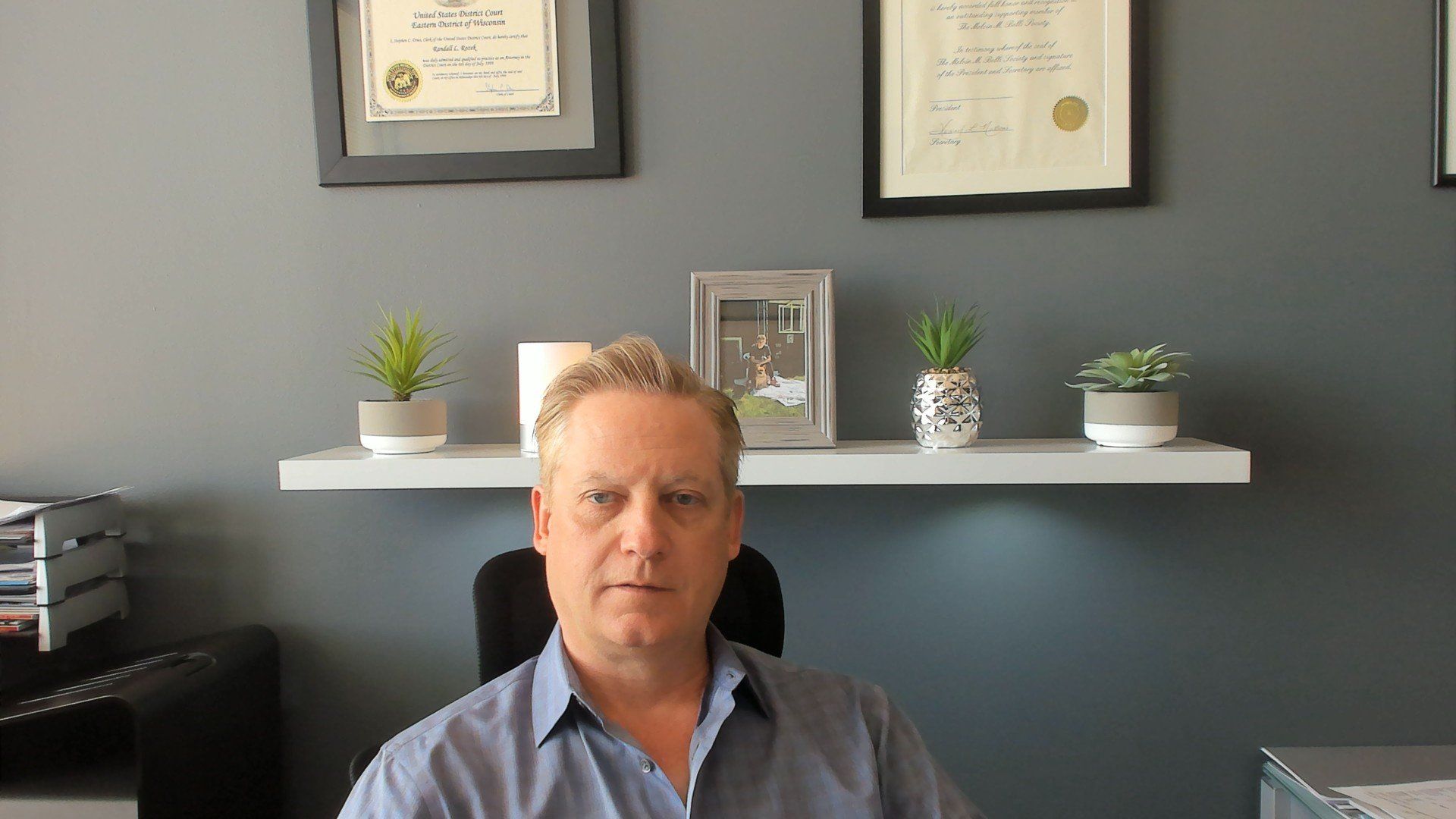
Congratulations to Attorney Randy Rozek on his election to be Chair of the American Association for Justice’s Traumatic Brain Injury Litigation Group. The American Association for Justice (AAJ) is the largest group of legal advocates for justice in the country. According to AAJ: “For over 70 years, AAJ has successfully defended Americans’ right to trial by jury and continues to fight every day to protect our practices, our clients’ rights, and our civil justice system.” The 3 pillars of AAJ are Community, Advocacy and Education. AAJ has over 50,000 members and has several different Litigation Groups made up of attorneys that specialize in different areas of the law. The Traumatic Brain Injury Litigation Group (TBILG) was established in 1991 in order to allow attorneys that handle Traumatic Brain Injury cases the ability to share their knowledge, techniques and experience. The TBILG has over 300 members from around the world. Pre-COVID19, the TBILG will typically put on two or three in-person conferences throughout the year and always had a reputation for bringing in great speakers and having a great turnout. Randy was asked about his election as Chair of the TBILG and had this to say: “It means a lot to me that my fellow trial lawyer colleagues bestowed upon my the great honor of leading the Traumatic Brain Injury Litigation Group for the next year. Our group is made up of some of the greatest TBI lawyers in the country, if not the world. I am proud to lead a group of great lawyers that have dedicated their practices to advocate for those individuals that have suffered from the devastating effects of brain injuries.” Rozek Law Offices, S.C. 3970 N Oakland Ave Ste 604 Milwaukee, Wisconsin 53211 (414) 374-4444 https://www.rozeklaw.com/

The vast majority of interactions between clients and Rozek Law Offices is not in-person contact. Typically, however, the initial contact between a potential client and Attorney Rozek would be an in person meeting. Due to the health concerns regarding the Coronavirus (COVID-19), Rozek Law Offices has implemented new technology that will allow potential clients to retain Attorney Rozek and Rozek Law Offices without an in-person meeting. A typical new client relationship with Rozek Law Offices now looks like the following:

MILWAUKEE, WI – We are pleased to announce that Randy Rozek, Rozek Law Offices, S. C., has been selected to the Brain Injury Association of America’s Brain Injury Preferred Attorneys Program. This is an exclusive partnership between the nation’s oldest and largest brain injury advocacy organization and one of Wisconsin’s foremost brain injury law firms. […]
Connect with Us:
Office Hours:
Monday - Friday
8:30am - 5:00pm